The road barely weighs
Reserve a 3 night Lexington trip from Cincinnati, 82.7 measured miles
Three nights in the Kentucky Bluegrass, 82.7 measured miles south of Fountain Square, from $585 per person. The drive is 1.62 hours, which leaves 0.54 hours of it against each booked night.
Nothing is held here until the office has written back and you have said yes to what it wrote. No part of a stay is ever paid for through these pages.
- Road from Fountain Square
- 82.7 miles
- Hours at the wheel
- 1.62
- Nights the office books
- 3
- Hours of road per night
- 0.54
- From
- $585 per person
Hours and miles are measured along the road from Fountain Square, not drawn straight on a map, and they assume clear traffic. Your own run will differ with weather, roadworks and the hour you leave.
Three nights against 1.62 hours
Ask the office to reserve a 3 night Lexington trip from Cincinnati and the arithmetic is settled first. Fountain Square to Lexington runs 82.7 measured miles. The office puts that at 1.62 hours in the car, then divides those hours by the three nights it books, which leaves 0.54 hours of driving against every night of the stay.
That quotient is the first of the four steps this office sorts by, the one where the road barely weighs. At 0.54 hours a night the drive stops being something the days have to be planned around. No start before daylight, no second driver, no day given up at either end.
The 1.62 hours is the run down and not the round trip; the same road brings the car back. A car that leaves Cincinnati in the morning is parked in Lexington with the first afternoon still whole.
Limestone under the pasture
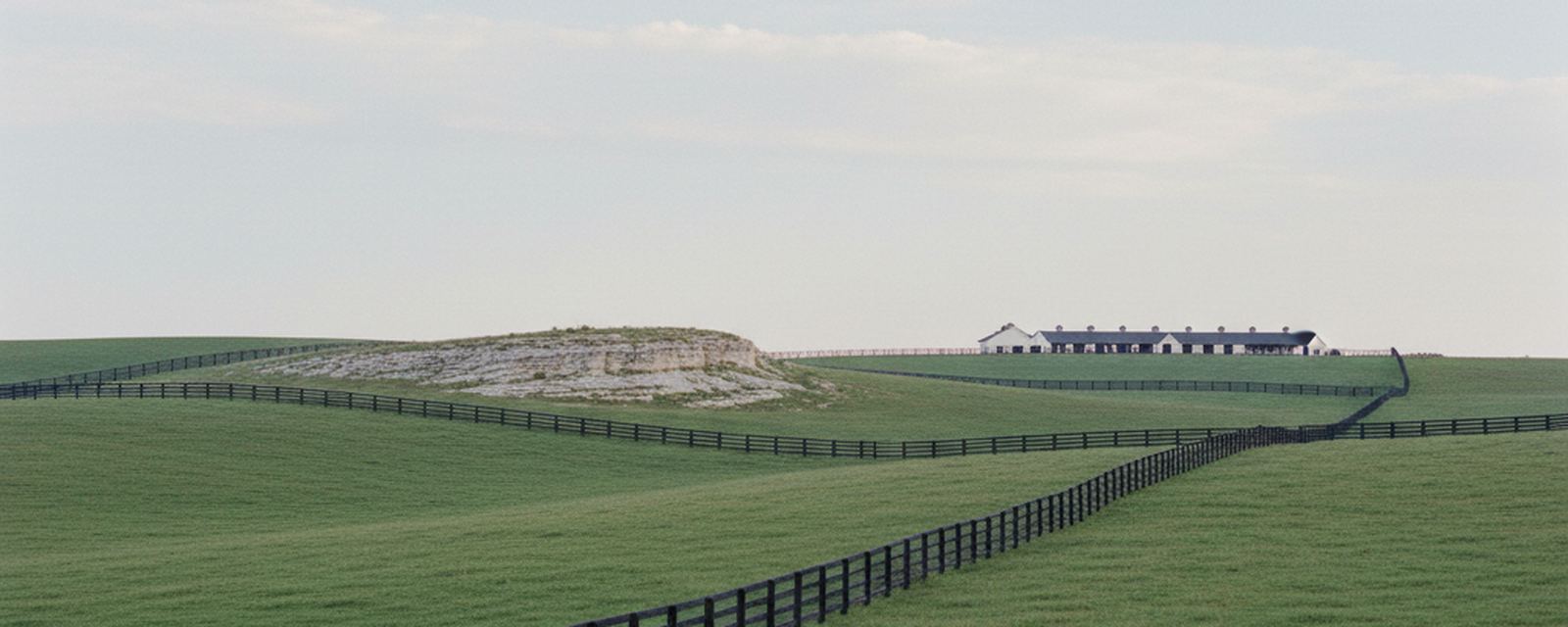
The ground around Lexington is thin soil over limestone, and that is the reason the horses are here. Water off that rock carries calcium, the pasture carries the calcium into the bone of young stock, and the breeding farms settled where the rock is. What a visitor looks at over a fence is a working industry rather than scenery arranged for looking at.
The fences are the other half of the view. Plank runs the length of whole ridges, painted black on some farms and white on others, and older than any of it are the dry stone walls, laid without mortar by 19th century masons, many of them Irish immigrants and many of them enslaved and later free Black men. The rebuilt pike northeast toward Paris keeps long stretches of that wall beside the road.
Some breeding farms take visitors by reservation, usually in the morning while the horses are out and the stalls are being cleaned. North of the city a state park keeps working barns, show rings and a harness track, and it is open whether or not a farm has room that week. In spring the mares and foals are in the fields, and that much is visible from any public road in the county.
A town small enough to cross on foot
Downtown Lexington is a compact grid of 19th century brick around a courthouse square, and three nights is enough to learn it. The old houses of Gratz Park stand a few blocks north of the square, and the state university campus begins a short walk south, which is why the streets fill in term time and go quiet in August.
Evenings sort themselves into two districts. West of the middle of town, on Manchester Street, old bourbon warehouses hold small distilleries and bars, and bourbon is why a good many people come off the interstate here at all. Back on Main Street the restaurants sit in the storefronts, and on Saturday mornings a market fills the block beside the courthouse.
Distances inside the city are short enough that the car can sit still for the whole stay. The written plan names where it sits and what is within a walk of the room, which for lodging downtown means the market, the square and the length of Main Street.
One day of the three, spent outside the city
Southeast of Lexington the Kentucky River has cut limestone palisades, and a city nature sanctuary out that way drops trails through hardwood toward the water. It is the one part of this stay that involves walking uphill, and it fills a morning without adding much to the driving.
West of town the old pike runs through Midway and on toward Versailles: two lane road, stone wall on both sides, horse farms behind the wall, one street of shops in each town. It is a slow loop and it is what the third night is for.
The distilleries outside the city sit across the counties west and south, down two lane roads with thin shoulders and nothing quick about them. That is a reason to keep the day out loose rather than fill it in advance.
What shows from the interstate
South out of Cincinnati the road crosses the river and climbs out of the basin through the northern Kentucky suburbs, which take a while to finish. Past Dry Ridge the ground opens out. Grant and Scott counties are ridge and hollow, hay ground, cattle, tobacco barns gone gray, with the interstate riding the high ground.
The first plank fence shows up near Georgetown, and from there to the Lexington exits the land flattens and greens and gets fenced into long straight runs. It is one road the whole way, so there is nothing to memorize, and nearly all of the 82.7 measured miles are spent on it.
The slower way down is the old two lane highway the interstate replaced, which runs beside it and goes through the middle of every town instead of past them. It is a pleasant drive and it is not the one the 1.62 hours describes, so anyone taking it should give the whole day to it.
What the figure holds
- Three nights of lodging in Lexington, held in the name of the person who asked for it.
- A written run down from Fountain Square, with the exits named in the order they come.
- Parking for one car, off the street, for the length of the stay.
- A plan for each of the three days, with addresses and an order that keeps the car still.
- Any farm or park visit that takes reservations, asked for ahead on the traveler's behalf.
- A note of what is walkable from the room and what will need the car.
What it leaves to you
- Fuel, and anything the car wants on the way down or back.
- Meals, apart from whatever breakfast the lodging puts out.
- Admission where a place charges to go in.
- Transport of every kind. The car is the traveler's own and so is the driving.
- Anything a fourth night would add. This entry is measured and priced at three.
The office adds no booking fee of its own. What you pay is what each supplier charges, and the written offer shows each line separately.
When this one is worth the road
April and October are the months that repay the road. Foals are out with the mares from late winter onward, the pasture comes back green through April, and the racing weeks fill the town in both months, which is worth knowing whether it is the reason to come or the reason to pick another week. Midsummer is humid and the fields go dull, though the evenings downtown hold up and rooms are easier to get. Winter strips the place back to stone walls and bourbon warehouses, and the farms take fewer visitors then, which the office says when it quotes the dates.
Is 1.62 hours the whole drive or one leg of it?
One leg. It is the run from Fountain Square down to Lexington, and the same road brings the car back. The 0.54 hours printed against this entry is that run divided by the three nights the office books, which is what puts it on the first step.
Does the office arrange any part of the driving?
No. The car belongs to the traveler and so does the driving. The office measures the road, writes it out with the exits in order, and books the nights waiting at the far end.
Can it be two nights instead of three, or four?
It can, and both figures on this page move if it is. Three nights against 1.62 hours is what puts this entry on the first step; two nights would raise the hours each night carries, and four would lower it. Name the number of nights in the request and the office will quote that instead.
Nothing in this list moves you. Getting from one place to the next is outside what this office reserves and it signs nothing with any carrier; you take your own car, and the office books what waits at the far end.
Start with the number of nights
Tell the office how many nights you have. Everything else follows from that number, including whether the drive is worth making at all.