Short road, three nights
109.1 measured miles, and you reserve a 3 night Columbus trip from Cincinnati at 0.75 hours of road per night
Columbus sits 109.1 miles up the road from Fountain Square, 2.24 hours of driving. Spread across the three nights the office books, that comes to 0.75 hours of road for each night in the city.
Nothing is held here until the office has written back and you have said yes to what it wrote. No part of a stay is ever paid for through these pages.
- Road from Fountain Square
- 109.1 miles
- Hours at the wheel
- 2.24
- Nights the office books
- 3
- Hours of road per night
- 0.75
- From
- $555 per person
Hours and miles are measured along the road from Fountain Square, not drawn straight on a map, and they assume clear traffic. Your own run will differ with weather, roadworks and the hour you leave.
Why this entry sits at the top of the list
A traveler who decides to reserve a 3 night Columbus trip from Cincinnati drives 109.1 miles north and spends 2.24 hours doing it. Three nights are booked at the far end of that road. Divide the one by the other and each night carries 0.75 hours behind the wheel, which is the figure the whole list is sorted by. Columbus lands on the first step of four, the step where the road barely weighs.
That order is the only order here. A long road propped up by a single night is a different proposition from a short road spread over three, whatever the room looks like at the end of it, and the office prefers to say which is which before a booking rather than after one.
Go Air Travels arranges no transport at all. The car belongs to the traveler, the road is public, and no part of the price moves anybody anywhere. What the office does is measure the road first and quote a bed second.
What is actually in Columbus
Columbus is wide and flat, built on the Scioto River, and the part a visitor wants is small. Downtown and the neighborhoods pressed against it hold most of it, which is what makes three nights work without much driving once the car is parked.
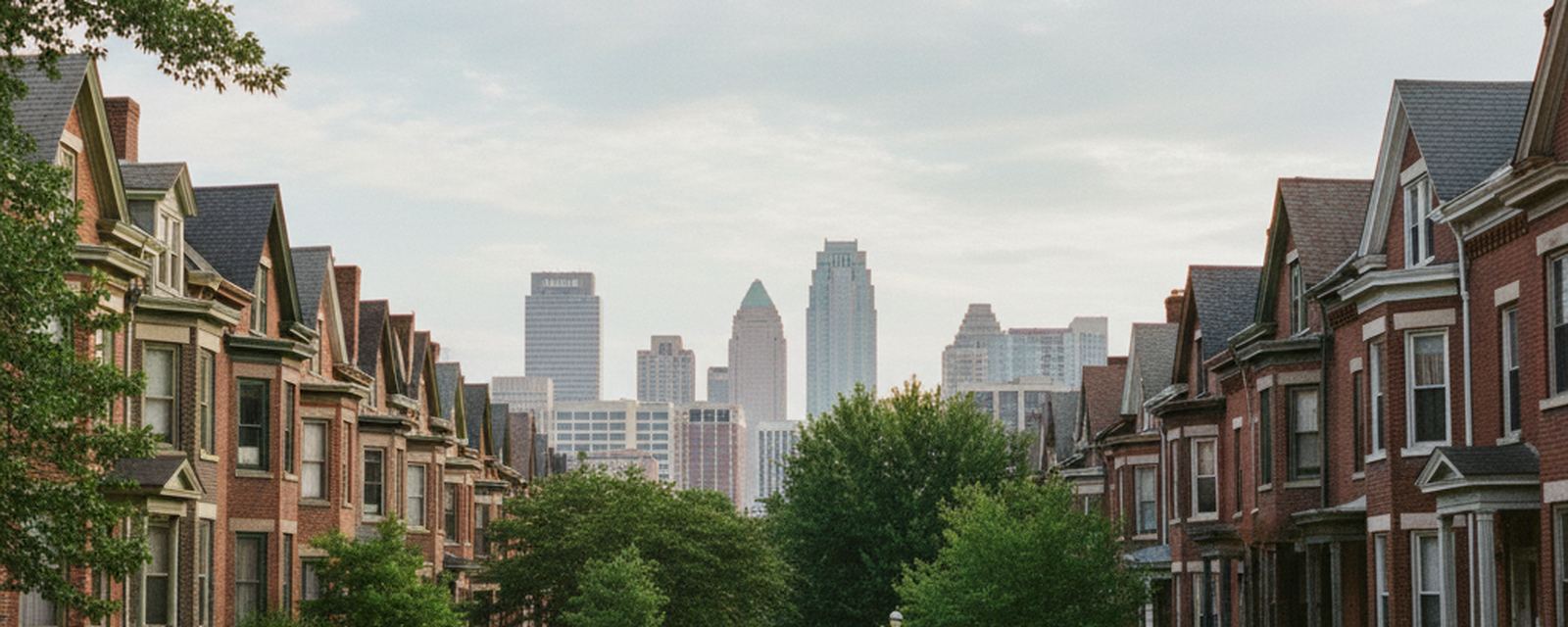
South of downtown the streets turn to brick. German Village keeps its nineteenth century houses tight against the sidewalk, with walled gardens behind them and a roof line that has not changed in a long time. North of downtown, High Street runs a strip of galleries, storefronts and painted walls up toward the university, with metal arches over the roadway that light after dark.
The river was narrowed and its banks reopened, so downtown now has parkland and a promenade on both sides of the water. West of the river, old warehouse blocks have filled up with studios and small workshops. The capitol keeps its own square of lawn in the middle of the grid, open to walk across.
Filling three nights without moving the car
Three nights gives two whole days plus the afternoon of arrival and the morning of leaving. With only 2.24 hours of road at either end, both of those edges are usable, and most people who book this one leave the car where it stands until the last morning.
One day tends to go south on foot: brick streets, a bookstore that takes up most of a block, a long lunch, the park at the end of the neighborhood. Another goes north: the covered market for breakfast, the gallery strip, the campus at the top of it, and the ravine paths along the Olentangy if the weather holds.
The third day is the one most people keep loose. Families usually spend it at the zoo north of the city or in the glasshouses on the east side. The office can leave those mornings empty on the written plan and say nothing more about them.
The drive north, and what it looks like
The road climbs out of the river basin at the start and then does very little. Interstate 71 runs northeast out of Cincinnati through the Little Miami country, past Lebanon and Wilmington, two lanes each way, no toll anywhere between the two cities.
Past Washington Court House the ground opens into the till plain. Grain elevators, section roads crossing at right angles, wind rows of trees along the field edges, and very little to steer around. In winter the wind comes across those fields with nothing to stop it, which is the one thing worth knowing about this drive.
Columbus appears as a skyline on flat ground and stays in view for a while before the exits begin. 109.1 miles, 2.24 hours, and the car is finished for three nights.
How the booking is held
The office books rooms and nothing else. It sells no transport, holds no agreement with anyone who moves people, and has no seat of any kind to offer. It is not an agent of anything and claims no standing it does not have.
A request arrives through the form on this site. The answer comes back in writing, with the property named, the three nights dated, the rate per person set out and the lodging taxes shown apart from it. Nothing is held until the traveler agrees in writing, and no money is taken on this site.
Rates start at $555 per person for the three nights and move with the season and the day of the week. The figure printed here is where a quote begins, and it is confirmed at the time of booking rather than in advance of it.
What the figure holds
- Three nights of lodging in Columbus, booked in the traveler's name and confirmed in writing.
- A space for one car, held with the room for all three nights.
- The measured road on paper: 109.1 miles, 2.24 hours, 0.75 hours of driving per night.
- Breakfast on each morning the property serves it.
- A written plan for the days, with nothing on it the traveler has not approved.
- Written answers before departure, from the same name at the office throughout.
What it leaves to you
- Transport of every kind. The car, its fuel and its upkeep are the traveler's own.
- Lodging taxes, quoted as a separate figure and settled at the property.
- Meals, apart from any breakfast the property serves.
- Admission to anything that charges it, such as the zoo, the museums and the glasshouses.
- Insurance of any kind. The office does not sell it, arrange it or advise on it.
The office adds no booking fee of its own. What you pay is what each supplier charges, and the written offer shows each line separately.
When this one is worth the road
This one earns the road from the middle of spring through the end of October, when the neighborhoods are outdoors, the river parks are in use and the evenings run long enough to walk after dinner. Late summer brings the state fair and the city fills up for it, which is either the reason to pick that week or the reason to avoid it; the office will say which weeks are busy when a request comes in. Winter works as well, because the market, the museums and the glasshouses are all indoors and the road stays flat and cleared, though the wind across the open fields north of Wilmington is real. The one week to watch is a home football Saturday, when rooms on the north side go early.
Is any part of the road arranged by the office?
No. The car is the traveler's own from start to finish. The office measures the road, prints 109.1 miles and 2.24 hours, and then books beds. It sells no transport and holds no agreement with anyone who provides it.
Why is 0.75 printed next to the price?
Because that number decides where this entry sits. 2.24 hours of driving divided by three nights is 0.75 hours of road for each night, and every entry in the list is ordered by that quotient. Columbus falls on the first of four steps, the one where the road barely weighs.
Does the office handle insurance, visas or passports?
None of the three. The office sells none of them, arranges none of them and offers no opinion on any of them. Questions about any of them belong with someone qualified to answer them.
Nothing in this list moves you. Getting from one place to the next is outside what this office reserves and it signs nothing with any carrier; you take your own car, and the office books what waits at the far end.
Start with the number of nights
Tell the office how many nights you have. Everything else follows from that number, including whether the drive is worth making at all.