202.9 measured miles east
Reserve a 2 night Charleston trip from Cincinnati
Charleston stands on a bend of the Kanawha River, 202.9 measured miles east of Fountain Square. The office holds two nights there, which puts 2.04 hours of driving behind each one.
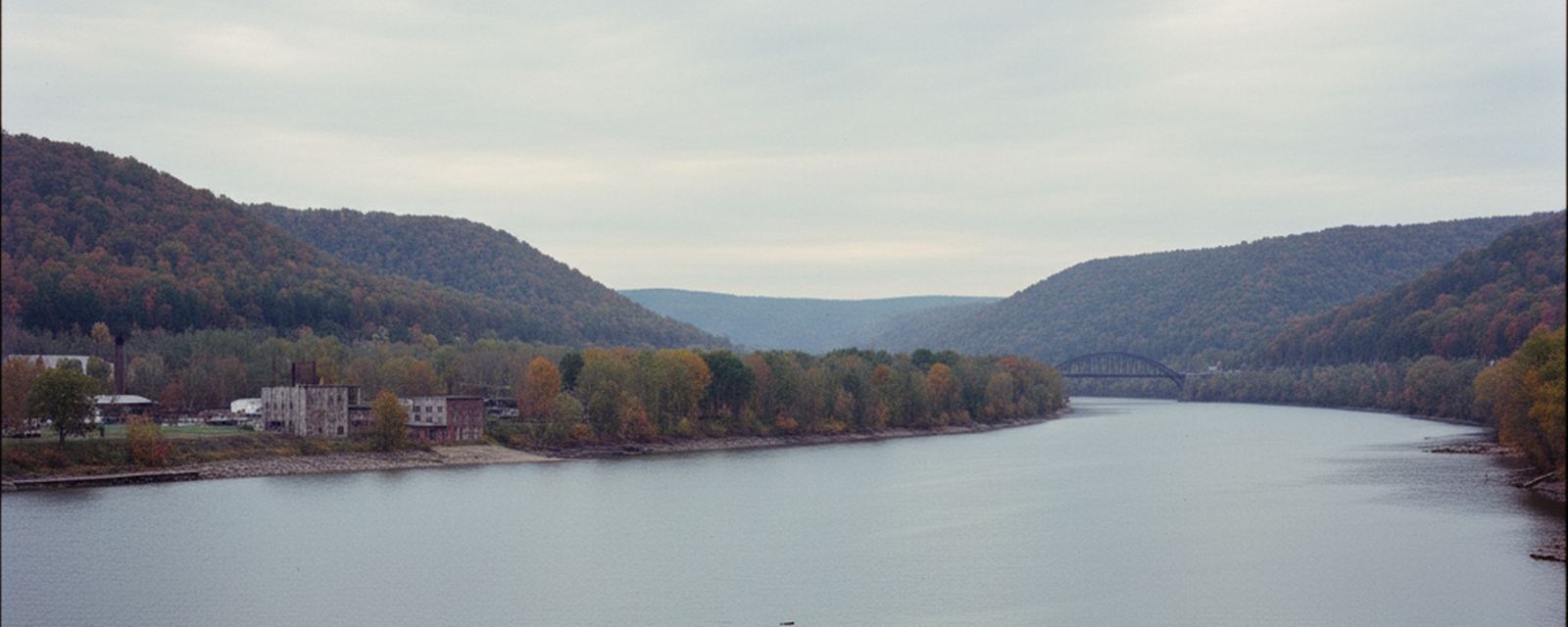
Nothing is held here until the office has written back and you have said yes to what it wrote. No part of a stay is ever paid for through these pages.
- Road from Fountain Square
- 202.9 miles
- Hours at the wheel
- 4.09
- Nights the office books
- 2
- Hours of road per night
- 2.04
- From
- $380 per person
Hours and miles are measured along the road from Fountain Square, not drawn straight on a map, and they assume clear traffic. Your own run will differ with weather, roadworks and the hour you leave.
Two nights where the Elk meets the Kanawha
Charleston is a small capital city on a bend of the Kanawha River, at the place where the Elk River comes down out of the north. Anyone asking to reserve a 2 night Charleston trip from Cincinnati is asking for a bed 202.9 measured miles east of Fountain Square, with 4.09 measured hours of driving in between. Two nights is the size the city takes: one day in the streets beside the water, one day in the hills standing behind them, and no third morning spent hunting for something left over.
The downtown crosses on foot. One main street of storefronts runs back from the river, a covered market fills an old freight building a few blocks north, and the limestone capitol with its gilded dome sits at the east end of the same bank. Past the capitol the streets fill with tall brick and frame houses from the years when coal still moved on the water.
None of it is scaled to a crowd. Go Air Travels measures the road first and offers the stay second, and on this one the road is the larger half of the arrangement.
Downriver to Huntington, then up the Kanawha
The measured route leaves the city on the north bank of the Ohio and keeps the river company for most of its length, through the small landings, past the long painted floodwall at Portsmouth, then on through Ironton before it crosses into West Virginia near Huntington. From there the road turns up the Kanawha valley and runs its last stretch between the water and the ridges, through Nitro and South Charleston, into the city.
202.9 miles and 4.09 hours are both taken along that road. The hours count driving and nothing else, so the day around them is longer: fuel, a meal, a leg stretched somewhere above the water. Said plainly, the road is most of a day, at the start of the stay and again at the end of it.
What the drive gives back is the view out of it. The Ohio side runs past locks, loading docks and flood gates; the West Virginia side opens into a narrow valley with the hills coming almost to the shoulder. It is worth doing in daylight, and that is the one thing the office says about the hour of departure.
A first day between the floodwall and Capitol Street
The riverbank is the spine of the place. A walk runs along the top of the floodwall with steps down to the landing at the water, and the whole downtown sits within a few streets of it. The state museum, inside the culture building on the capitol grounds, is the indoor stop that carries a wet afternoon.
The covered market is the other fixed place: produce stalls, a butcher, a fish counter, bread, and seating enough to turn it into a slow midmorning. Capitol Street, one block up the slope, holds most of the storefronts and most of the kitchens.
Between those two the day fills itself. The East End houses repay a slow walk, the capitol grounds are open to cross on foot, and the riverfront is where the evening ends when the light comes off the water.
A second day in the hollow south of town
The state forest south of the city is the reason two nights work here rather than one. It runs back into a hollow with a creek along the bottom, old grades from the coal camps climbing both sides, and marked trails that range from a flat walk beside the water to a hard pull up to the ridge. It sits close enough that a morning start has a traveler on a trail before the day warms.
North of the river a county park holds the ridge with an overlook back down at the valley, and the Elk River road runs up into farm country for anyone who would rather drive slowly than walk. Either way the second day belongs outdoors.
The gorge country further east is a separate trip. It does not fit inside two nights on this road, and the office would rather write that here than let it be assumed.
What 4.09 hours across two nights comes to
4.09 hours of driving spread across two nights works out at 2.04 hours of road for every night held. That quotient is the only order the list has, and it sets Charleston on the third step of four, where the road is most of a day. One step asks more of a driver than this one; the other two ask less.
Written out, it means a morning handed to the road, two nights in the city, and a second morning handed back on the way home. For a place this size that is an even exchange, and it is said before the reservation instead of discovered after it.
The price starts at $380 per person. The final figure is confirmed when the reservation is made, since it moves with the dates and with the number of people sharing a room.
What the figure holds
- Two nights of lodging in Charleston, reserved and held in the traveler's own name
- Parking for one car for both nights of the stay
- A written confirmation naming the address, the dates and the agreed price
- The measured sheet for this run, 202.9 miles and 4.09 hours, written out before departure
- The quotient for the stay, 2.04 hours of driving for every night held, stated up front
What it leaves to you
- Transport of every kind. The office arranges none of it, and the road is driven in the traveler's own car.
- Fuel and the running cost of the car, in both directions
- Meals, unless a meal is written into the confirmation
- Insurance, visas and passports. None of the three is sold, arranged or advised on here.
- Admissions, downtown parking, and anything settled on the spot in Charleston
The office adds no booking fee of its own. What you pay is what each supplier charges, and the written offer shows each line separately.
When this one is worth the road
Late spring and the back half of October are when this road earns its 4.09 hours. In May the hills above the Kanawha are wet and green and the creek in the state forest runs full; in October the ridges turn, though nobody can promise a given week of it. Summer is humid and the valley holds the heat, which suits a market morning better than a climb. Winter is the honest low season: the city keeps working and the trails stay open, but the drive beside the Ohio deserves daylight, and in December there is less of it to spend.
Who drives, and what is actually held?
The traveler drives. The office arranges no transport of any kind, for this stay or for any other, and the 202.9 miles are covered in the traveler's own car at the traveler's own hour. What is held here is the bed at the far end and the two nights it is kept for.
Should the road be driven in one run?
4.09 hours is time at the wheel and counts no stops, so a single run is possible and a broken one is common. Portsmouth and Ironton both sit at a sensible place to break it, and both sit on the water. Either way the road is most of a day, which is why this stay is held for two nights rather than one.
Is two nights enough for Charleston?
For the downtown, the riverfront and one full day in the state forest, yes. Charleston is a small capital and it hides very little. What two nights will not cover is the gorge country further east, and the office puts that here rather than after the reservation.
Nothing in this list moves you. Getting from one place to the next is outside what this office reserves and it signs nothing with any carrier; you take your own car, and the office books what waits at the far end.
Start with the number of nights
Tell the office how many nights you have. Everything else follows from that number, including whether the drive is worth making at all.